Hiển thị các bài đăng có nhãn Khmu. Hiển thị tất cả bài đăng

Thứ Hai, 13 tháng 6, 2011

Oudomxay - the heart of Northern Laos

The Oudomxay province was founded in 1976, as a split off of the much larger Luang Prabang province. In 1987 Muang Xay became the capital of the province.

The first documented settlers of the province where "Khom" or people nowadays known as Khmu. In 1260, Lao Ly arrived from the Sipsongpanna "12 thousand rice fields" area in Southern China and build Ban Luang Cheng in the area of Muang Xay. Ly culture marked by a fusion of Buddhism and the old animist beliefs of the Khom grew and became influential in the region of Oudomxay. The Khmu are the largest minority in Laos (+500'000 members) and in Oudomxay they form the majority of the population with a 60-80% share.
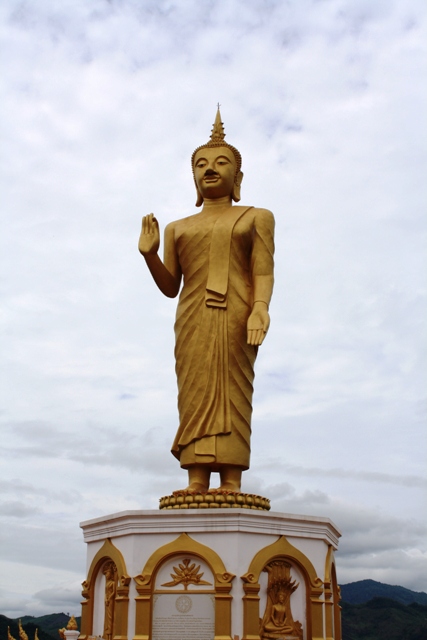
Around 1828, Hmong tribes coming from Southern China moved into Laos and built their hamlets and settlements in Oudomxay. Hmong people count for a 15% of the total population of the province.

Other ethnic groups living in Oudomxay province are the Akha, the Phouthai (Thai Dam & Thai Khao), the Phou Noy (Phou Xang, Phou Kongsat, Phou Nhot), the Lao Houy (also „Lenten“), the Phouan, the Lue, the Yang, the Ikho and the Ho. Oudomxay is one of the most ethnic diverse provinces of Laos...

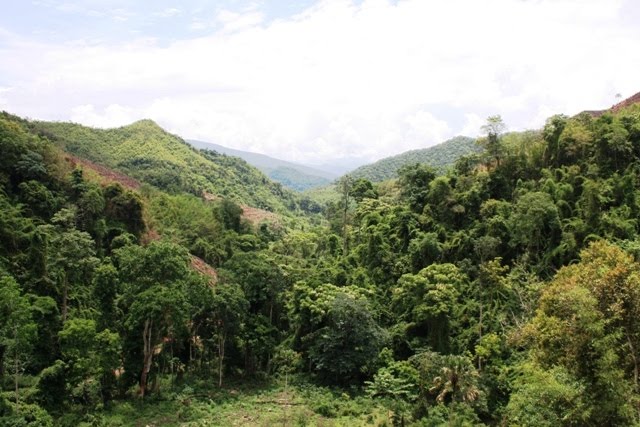
Oudomxay is very mountainous and altitudes vary between 300 and 1'800 meters above sea level. Due to these particular difficult topographic conditions in the province of Oudomxay, infrastructure projects and improvements are progressing slowely and maintenance costs are high. Road conditions are poor to bad, and sometimes in the rainy season roads are impassable.

There are still villages and small settlements in the province who do not have any access to roads, hospitals and higher education facilities.

Oudomxay province shares borders with the following Laotian provinces: Phongsali, Luang Prabang, Xayaboury, Bokeo and Luang Namtha. In the northwest is a border with Xishuangbanna, People's Republic of China.

However, Oudomxay province offers a large range of attractions. The provinces' key characteristics are its nature, its people and its diverse culture. An overview of possible tours in the area can be found on the web sites of Samlaan Cycling and the Provincial Tourism Department.
Continue Reading →

Thứ Ba, 7 tháng 6, 2011

Khmu culture and lifestyle

Shortly after breakfast we meet Ken of Samlaan Cycling and started with our visit of one of the oldest and largest communities and original inhabitants of Laos - the Khmu. The Khmu are an agricultural society, but also gathering, hunting, trapping and fishing are important parts of their lifestyle. Their language is also called Khmu and belongs to the Austro-Asiatic group of languages.

We departed from Muang La resort in the morning and enjoyed a pleasant transfer along the scenic Nam Pak.

Along the way we encountered rice terraces, small settlements and houses of the Khmu minority. In Ban Mai, a small Khmu hamlet, we walked through the village and interact with locals. After observing their daily life we then continued to Ban Phavie.

We trekked on a small green path along a little creek. We had the opportunity to meet farmers working in rice paddies and found some bird and fish traps.

After 1 hour and a half walk through the green forest, we arrived at the Khmu village of Ban Phavie, beautifully nestled in the end of a green valley situated at a small creek.

The local villagers prepared a traditional lunch for us: Laap Gai, some freshly collected mushrooms and vegetables and yes, of course also sticky rice. During the preparation of the meal we learned about the Khmu tradition of trapping and hunting. We observed and tested small little traps while they have been shown and explained to us.
After lunch we continued to a small clear waterfall just a little outside the village. We relaxed for a while at the cascades of the waterfall.

Then we returned to Muang La.
Continue Reading →

Thứ Sáu, 18 tháng 6, 2010

Uncharted land - caves, monks and Khmu

On my last visit in Luang Prabang I had the opportunity to visit an "unknown" cave. Tham Khou Pa. The monks used to live in that cave 10 years ago. There are rumors, that the monks engaged with local village girls. So the government ordered them to leave the place. Since then the place is deserted.

The cave, the mountain, the rice paddies and the whole area are very pristine and preserved.

The foot of the mountain is surrounded by a agricultural land mainly used to grow rice. A small path leads along and finally through the paddies for about 200 to 250 meters before it reaches the slop which ascends in a 45 degree angle to the top of the mountain. The path continues to some small bush vegetation and a small mountain side field, containing all kind of crops, such as bananas, pineapple, maize, cassava and other eatable plants. The garden is owned by a Khmu family.

We met the 80 years old grandfather of the family who finally showed us the way to the cave. As our first attempt, lead by a local guide was unsuccessful.

The old man met us at the rock cliffs where we were waiting for him, soaked in our on sweat. The last part just before the slop ends and goes over in a rocky, more mountainous area, the trail was overgrown with grass and bamboo. We used some knives which we broth along for the purpose to make our own path.

I consider myself as a more sportive person, but compared to the old Khmu I had not the slightest chances of keeping pace with him. In fact I lost him after 3 minutes. He even overtook our own 25 year old Lao guide. The old guy was sitting in front of the cave, smiling and waiting for us. While the rest lost another liter of body fluid... I was quite a bit impressed of the old Khmu guys fitness. Well, more than 65 years of gardening on the mountain seems to make one stronger... Some small parts included minor climbing skills.

The cave itself is very interesting and one can see that it has been left for a long time. Some wooden and bamboo structures built by the monks still remain intact, though the time takes its tribute.
Natural light and ventilation make the cave quite a livable place. The cave consists of an small entrance area and one big chamber with some smaller hideaways, which were used by the monks as sleeping area.

All in all a very nice, interesting and "undiscovered" cave, just a few minutes from Nam Khan.

Needless to say that I had to refill my missing body fluids with a couple of beerlaos afterwards.
Continue Reading →

Thứ Tư, 12 tháng 5, 2010

Khiri Travel Launches ‘Tribes and Rivers of Northern Laos’ – A 7 Day Tour

BANGKOK, THAILAND, 4 February 2010 – Khiri Travel has launched a “Tribes and Rivers of Northern Laos” tour. The luxury seven-day tour is part of the company’s Khiri Gold collection of travel experiences. Khiri Gold tours are designed for discerning top-end travellers who require authentic travel without compromising comfort levels.

The tour explores the northern Laos UNESCO World Heritage town of Luang Prabang and its surrounding areas for two days. Then the focus moves to the exotic array of hill tribe minority villages available from the Muang La luxury boutique resort in Udom Xay province. The area is deep in the mountains of northern Laos on the way to the Chinese border.

From Muang La Resort, there are trips by 4WD and gentle hikes on foot to visit an Akha village perched on a 3,000 foot mountain top. In the village the women folk wear colourful headdresses adorned with silver coins. Guests also explore Hmong, Lao Loum and Khmu tribal villages.

Khiri Gold’s “Tribes and Rivers of Northern Laos” trip includes five hours on a comfortable riverboat cruising on the Nam Ou River. Guests enjoy a picnic lunch on a secluded river beach amid some of the most dramatic scenery in Southeast Asia.

“We are confident that discerning guests will love the Muang La boutique resort,” said Marc Albert, the Country Manager of Khiri Travel Laos. “The resort is surrounded by forests, rice fields, and hot water springs that are thousands of years old. A Buddhist temple on the valley side adds spirituality to a place that has changed very little through the years.”

Muang La resort consists of three wooden villas of ethnic design. Local Laotian art in the rooms add to the experience. A unique feature of the resort is its candle-lit Lao sauna, where steam is scented with natural herbs and grasses to create a truly relaxing experience. There is also a large spa plunge pool for guests to luxuriate in.

At the resort, guests can select where they would like their dining table placed in the gardens which are lit by torchlight and candles in the evening. The Muang La resort serves a fine selection of wines and champagne.

Guests also spend over two and a half days exploring the attractions of Luang Prabang and the surrounding area. Highlights include walking tours and visits to textile galleries, weaving centres, museums and temples. Early risers can witness the moving sight of long lines of bare-foot monks on their silent morning alms rounds.

Visitors also get to inspect the Pac Ou caves which contain up to 3,000 Buddha images, many of them inlaid with semi-precious stones.

According to Willem Niemeijer, co-founder of Khiri Travel, guests can now explore many culturally-rich corners of Indochina without compromising comfort levels, service standards or food and beverage options. “Khiri Gold itineraries open a new world of possibilities to top-end travellers. It’s a growth trend we see continuing, especially in source markets such as Europe, North America, Australia and among expatriates in Asia.”
Continue Reading →

Popular Posts